

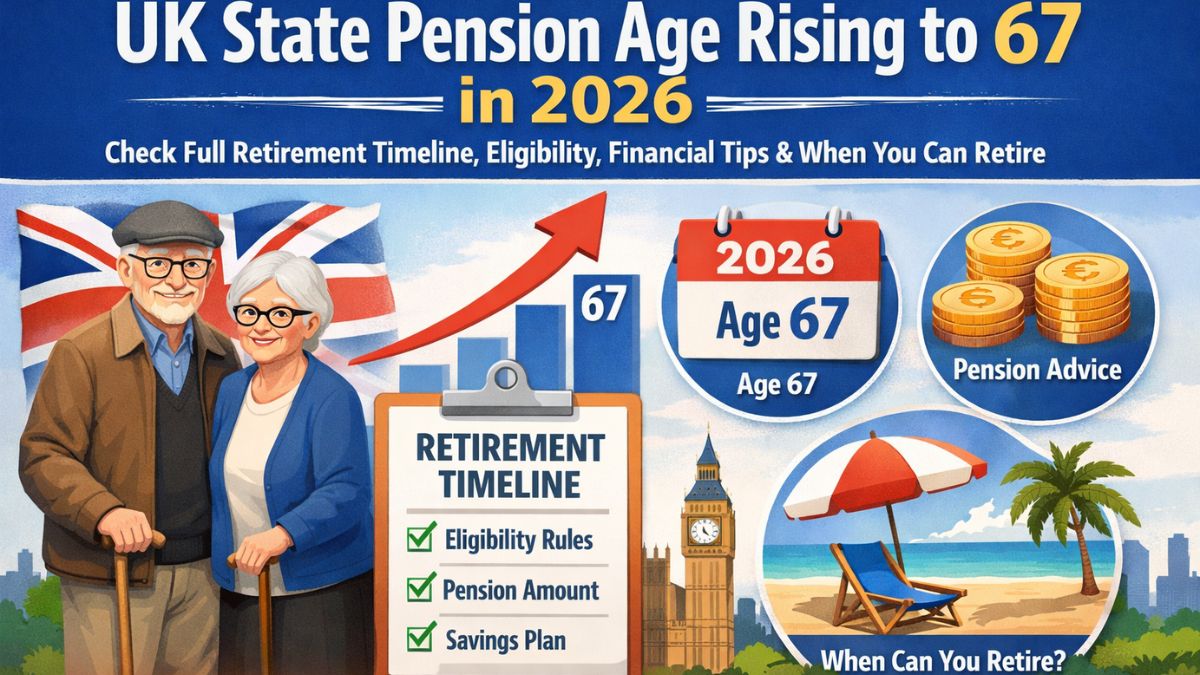
The UK government’s decision to raise the State Pension age to 67 in 2026 marks a significant shift in how retirement is planned across the country. For millions of workers, this change is not just a number—it directly impacts when they can stop working, how much they need to save, and what kind of financial future they can expect. While the idea of working longer may feel unsettling for some, understanding the full picture can help you prepare wisely and even take advantage of new opportunities.
This transition has been introduced gradually over the years, giving people time to adapt. However, with 2026 approaching, it has become more important than ever to clearly understand the retirement timeline, eligibility requirements, and smart financial strategies that can help you navigate this change with confidence.
Why the State Pension Age Is Increasing
The rise in the State Pension age is largely driven by increasing life expectancy and the growing financial pressure on public funds. People in the UK are living longer than ever before, which means pensions need to be paid out for more years. While this is a positive sign of improved healthcare and quality of life, it also creates a challenge for the government to sustain pension payments.
As a result, policymakers have decided to gradually increase the retirement age to ensure the system remains financially stable. By raising the age to 67, the government aims to balance longer life spans with a sustainable pension structure. Although this may require individuals to work a bit longer, it is intended to secure pension benefits for future generations as well.
Full Retirement Timeline: When You Can Expect to Retire
The transition to a State Pension age of 67 is not happening overnight. It is being introduced in stages, affecting people differently depending on their date of birth. Those born earlier may still qualify for retirement at 66, while younger individuals will need to wait until 67.
For people born between certain years, the increase will be phased in gradually, meaning their pension age may fall somewhere between 66 and 67. This staggered approach helps reduce the sudden impact on individuals and allows time for financial adjustments.
Understanding your personal retirement timeline is crucial. It determines not only when you can claim your State Pension but also how long you may need to continue working or rely on other sources of income. Checking your specific pension age using official tools or financial advisors can provide clarity and help you plan ahead more effectively.
Eligibility Criteria for the UK State Pension
Qualifying for the UK State Pension depends on your National Insurance contributions. Typically, you need at least 10 qualifying years to receive any State Pension, and around 35 years to receive the full amount. These contributions are usually made through employment, self-employment, or credited periods such as caring responsibilities or unemployment.
If you have gaps in your National Insurance record, you may still have options to fill them by making voluntary contributions. This can be particularly useful for those who have taken career breaks or worked abroad for a period of time.
Eligibility also depends on reaching the official State Pension age, which, as mentioned, is increasing to 67. It is important to regularly review your contribution record and ensure you are on track to receive the pension you expect.
How Much State Pension Will You Receive?
The amount you receive from the State Pension depends on your contribution history. Those with a full National Insurance record can expect to receive the full new State Pension amount, which is adjusted annually to keep up with inflation and living costs.
However, if you have fewer qualifying years, your pension will be proportionally lower. This makes it essential to understand your current standing and take steps to improve it if necessary.
It’s also worth noting that the State Pension is designed to provide a basic level of income in retirement. For most people, it may not be enough to maintain their desired lifestyle, which is why additional savings and private pensions play a crucial role.
Financial Tips to Prepare for Retirement at 67
Planning for retirement in light of the new pension age requires a proactive approach. One of the most effective strategies is to start saving as early as possible. The earlier you begin, the more time your money has to grow through compound interest.
Workplace pensions are another key component of retirement planning. Many employers in the UK offer pension schemes with contributions from both the employee and employer. Taking full advantage of these schemes can significantly boost your retirement savings over time.
Diversifying your investments can also help manage risk and maximize returns. This might include a mix of stocks, bonds, and other assets tailored to your risk tolerance and financial goals. Consulting a financial advisor can provide personalized guidance and help you make informed decisions.
Budgeting and reducing unnecessary expenses can free up additional funds for savings. Even small changes in spending habits can make a big difference over the long term. Additionally, paying off debts before retirement can reduce financial stress and provide greater flexibility.
When Should You Actually Retire?
While the State Pension age sets a benchmark, it does not necessarily dictate when you must retire. Many people choose to retire earlier or later depending on their financial situation, health, and personal preferences.
Retiring early may require substantial savings to cover the gap before State Pension payments begin. On the other hand, delaying retirement can increase your pension amount and provide additional financial security.
Some individuals opt for a phased retirement, gradually reducing working hours instead of stopping completely. This approach allows for a smoother transition and helps maintain a steady income while adjusting to a new lifestyle.
Ultimately, the decision of when to retire is highly personal. It should be based on a careful assessment of your finances, goals, and overall well-being.
The Emotional and Lifestyle Impact of Working Longer
Beyond finances, the increase in the State Pension age also has emotional and lifestyle implications. For some, working longer can be an opportunity to stay active, engaged, and socially connected. It can provide a sense of purpose and routine that is beneficial for mental health.
However, for others, especially those in physically demanding jobs, the prospect of working until 67 can be challenging. This highlights the importance of career planning and possibly transitioning into roles that are less physically demanding as retirement approaches.
Maintaining a healthy work-life balance becomes increasingly important. Taking care of your physical and mental health can help ensure that you remain capable and comfortable in your working years leading up to retirement.
Final Thoughts: Preparing for a New Retirement Reality
The rise in the UK State Pension age to 67 in 2026 represents a new reality for current and future retirees. While it may require adjustments, it also presents an opportunity to rethink and strengthen your financial plans.
By understanding the retirement timeline, meeting eligibility requirements, and adopting smart financial strategies, you can navigate this change with confidence. Retirement is not just about reaching a certain age—it’s about achieving financial security and enjoying the lifestyle you desire.
With careful planning and informed decisions, you can turn this shift into a positive step toward a stable and fulfilling retirement future.
FAQs
1. When will the UK State Pension age increase to 67?
The State Pension age will begin rising to 67 from 2026 and will be fully implemented by 2028, depending on your date of birth.
2. How many years of National Insurance do I need to qualify?
You need at least 10 qualifying years to receive any pension, and around 35 years to get the full State Pension amount.
3. Can I retire before the State Pension age?
Yes, you can retire earlier, but you won’t receive the State Pension until you reach the official pension age, so you’ll need other savings or income.