


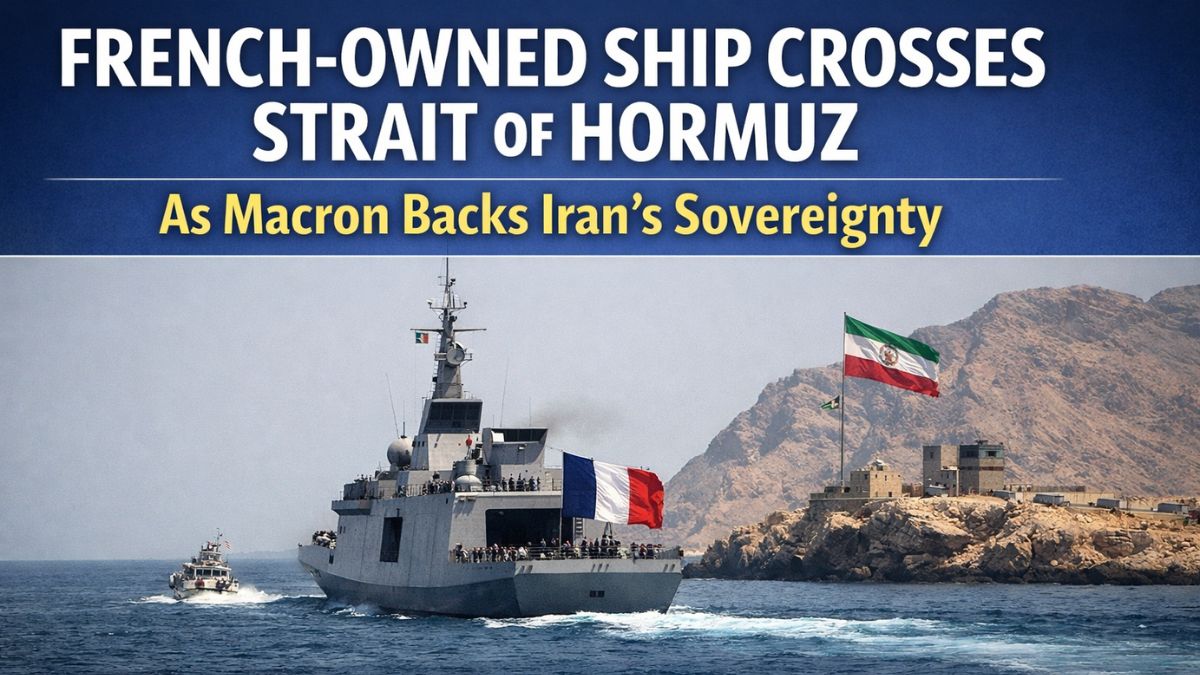
In a striking development that has captured international attention, a French-owned container ship successfully crossed the Strait of Hormuz, one of the world’s most strategically vital maritime routes. This passage comes at a time when the region is experiencing heightened tensions following a prolonged conflict involving Iran and Western-backed forces. The waterway, which typically handles a significant portion of global oil and gas shipments, had been nearly shut down, making this transit both symbolic and strategically important.
The vessel’s journey is not merely a routine maritime operation but a signal that geopolitical currents may be shifting. After weeks of uncertainty and restricted navigation, the successful crossing suggests that certain diplomatic pathways remain open, even in a highly volatile environment.
A Strategic Passage Through a Sensitive Waterway
The French-linked ship became one of the first Western-associated vessels to navigate the Strait since the outbreak of conflict that disrupted shipping lanes in late February 2026. Maritime traffic had slowed dramatically, with only a limited number of ships—primarily from countries perceived as neutral or friendly—allowed to pass.
What makes this event particularly noteworthy is the method by which the vessel secured safe passage. Reports indicate that the ship clearly signaled its French ownership while entering the region, a move widely interpreted as a diplomatic gesture aimed at avoiding confrontation. This approach appears to have aligned with Iran’s selective policy of allowing access to ships from nations it does not consider hostile.
Macron’s Diplomatic Position and Support for Sovereignty
French President Emmanuel Macron has played a crucial role in shaping the narrative surrounding this development. Rather than supporting military intervention, Macron has consistently emphasized diplomacy, dialogue, and respect for national sovereignty—including that of Iran. His stance reflects a broader effort to de-escalate tensions while maintaining France’s independent voice in global affairs.
Macron has also expressed skepticism about the feasibility of reopening the Strait of Hormuz through force, suggesting that such an approach would only intensify the crisis. Instead, he has advocated for negotiations and ceasefire efforts as the only sustainable path toward restoring normalcy in the region. This position has likely contributed to France being viewed differently from other Western powers involved in the conflict.
Iran’s Calculated Maritime Strategy
Iran’s handling of the Strait during the crisis has been both strategic and measured. Rather than imposing a complete blockade, Tehran has adopted a selective approach, allowing passage to vessels associated with countries that maintain a neutral or non-confrontational stance. This policy enables Iran to exert control over the waterway while avoiding total disruption of global trade.
The French ship’s successful crossing highlights how diplomatic positioning can influence operational outcomes. By distinguishing between nations based on their political alignment and rhetoric, Iran appears to be leveraging maritime access as a tool of geopolitical signaling. This calculated strategy has introduced a new layer of complexity to an already intricate international situation.
Implications for Global Trade and Energy Markets
The Strait of Hormuz is a critical artery for global energy supply, with a substantial percentage of the world’s oil and liquefied natural gas passing through it. Any disruption in this corridor has immediate consequences for international markets, driving volatility in energy prices and supply chains.
The recent passage of select vessels, including the French-owned ship, offers a glimpse of cautious optimism. It suggests that while the strait remains under tight control, there is potential for limited reopening under specific conditions. However, the overall volume of maritime traffic continues to be significantly lower than usual, and uncertainties remain high.
A Subtle Shift in International Relations
Beyond its economic implications, the event also signals a subtle shift in global diplomatic dynamics. France’s approach—marked by neutrality, restraint, and respect for sovereignty—appears to have positioned it as a more acceptable actor in the eyes of Iran. This differentiation underscores the importance of nuanced foreign policy in times of crisis.
The crossing of a single ship may seem minor in isolation, but it carries broader symbolic weight. It demonstrates that even amid conflict, diplomacy can create openings where confrontation might otherwise prevail. It also highlights how nations can navigate complex geopolitical landscapes by balancing national interests with international cooperation.
Conclusion
The successful transit of a French-owned ship through the Strait of Hormuz stands as a powerful example of diplomacy in action. In a region marked by tension and uncertainty, it reflects the potential for dialogue and strategic neutrality to facilitate progress. As global stakeholders continue to monitor developments, this घटना may serve as an early indication of how careful diplomacy can help stabilize one of the world’s most critical maritime corridors.
FAQs
Q1. Why is the Strait of Hormuz important?
It is a key global shipping route through which nearly 20% of the world’s oil supply passes.
Q2. Why was the French ship crossing significant?
It was among the first Western-linked vessels to pass after Iran restricted the route due to conflict.
Q3. What is Macron’s stance on the situation?
He supports diplomatic solutions and emphasizes respecting Iran’s sovereignty rather than military action.