


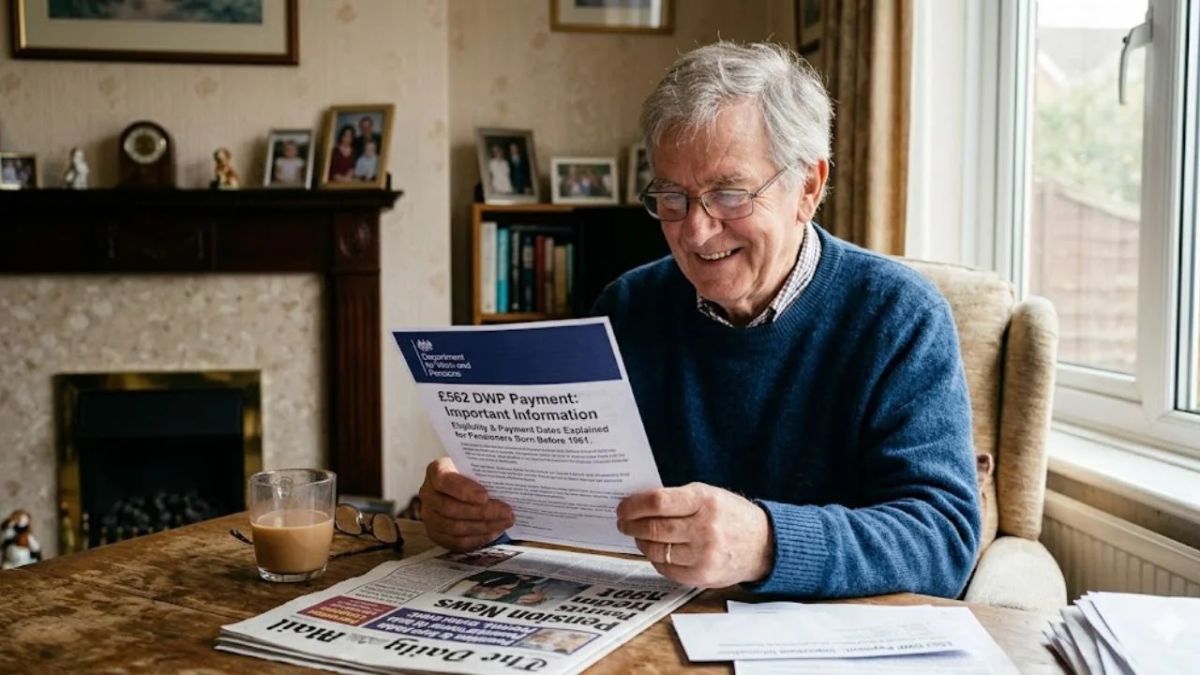
The £562 update regarding pension payments in 2026—brought to the fore by the Department for Work and Pensions (DWP)—is considered significant for those currently receiving a pension or eligible to do so. This update is specifically aimed at senior citizens born before 1961 who fall under the UK’s State Pension system. Taking into account rising inflation and the cost of living, the government periodically revises pension rates to ensure financial stability for beneficiaries.
What Does the £562 Pension Payment Signify?
The figure of £562 is generally viewed as a reference amount, which, under specific circumstances, may represent a combination of pension payments or related benefits. It does not constitute a distinct, standalone new scheme; rather, it may represent the cumulative effect of the basic pension, additional benefits, or cost-of-living adjustments.
In the UK, the pension amount depends on several factors, such as the number of years an individual has made National Insurance contributions, their income status, and whether they are eligible for any additional benefits.
Eligibility for Those Born Before 1961
The most crucial aspect of this update is its relevance to individuals born before 1961. Such individuals are typically at or above the State Pension age and receive benefits under either the New State Pension or the Basic State Pension.

When determining eligibility, the DWP considers various factors, including the individual’s age, their record of National Insurance contributions, and their residency status. If an individual has made sufficient contributions, they may be entitled to receive either a full pension or a partial pension.
How is the Pension Amount Determined?
In the UK, the pension amount is not a fixed sum; instead, it is contingent upon an individual’s contribution history. If an individual has made National Insurance contributions over an extended period, they may receive a higher pension.
Furthermore, if an individual possesses other sources of income, this may also have an impact on their pension entitlement. The government periodically increases pensions in line with inflation; this is implemented under the “triple lock” policy, which ensures that pension amounts can rise every year.
Additional Benefits and Cost of Living Support
Pensioners receive not only the basic pension but often additional financial support as well—such as cost-of-living payments, winter fuel payments, and other assistance schemes.

These supplementary payments are provided under specific circumstances to offer relief to the elderly amidst rising expenses. While such benefits are often automatic, an eligibility check may be required in certain cases.
Application and Payment Process
Applications for the State Pension or any related benefits can typically be submitted online, by phone, or via post. Through the DWP and relevant government portals, beneficiaries can update their personal details and check the status of their payments. Payments are deposited directly into the recipient’s bank account, ensuring a secure and streamlined process.
Conclusion
The DWP £562 Pension Payment Update for 2026 is a significant topic for individuals in the UK who are currently receiving a pension or are eligible to do so—particularly those born before 1961. This update highlights potential changes within the pension system, the availability of additional support, and the provision of financial security in the face of rising living costs. By staying informed, understanding their eligibility, and keeping up with timely updates, pensioners can fully utilize their benefits and enhance their financial well-being.
FAQs
Q1. What is the DWP £562 pension payment update in 2026?
A. It refers to a pension-related update or combined benefit amount linked to UK pension schemes and cost-of-living adjustments.
Q2. Who is eligible for this pension update?
A. Pensioners born before 1961 who meet State Pension age and National Insurance contribution requirements may be eligible.
Q3. Is the £562 a fixed monthly pension amount?
A. No, it is not a fixed universal amount; actual pension depends on individual contributions, eligibility, and additional benefits.