
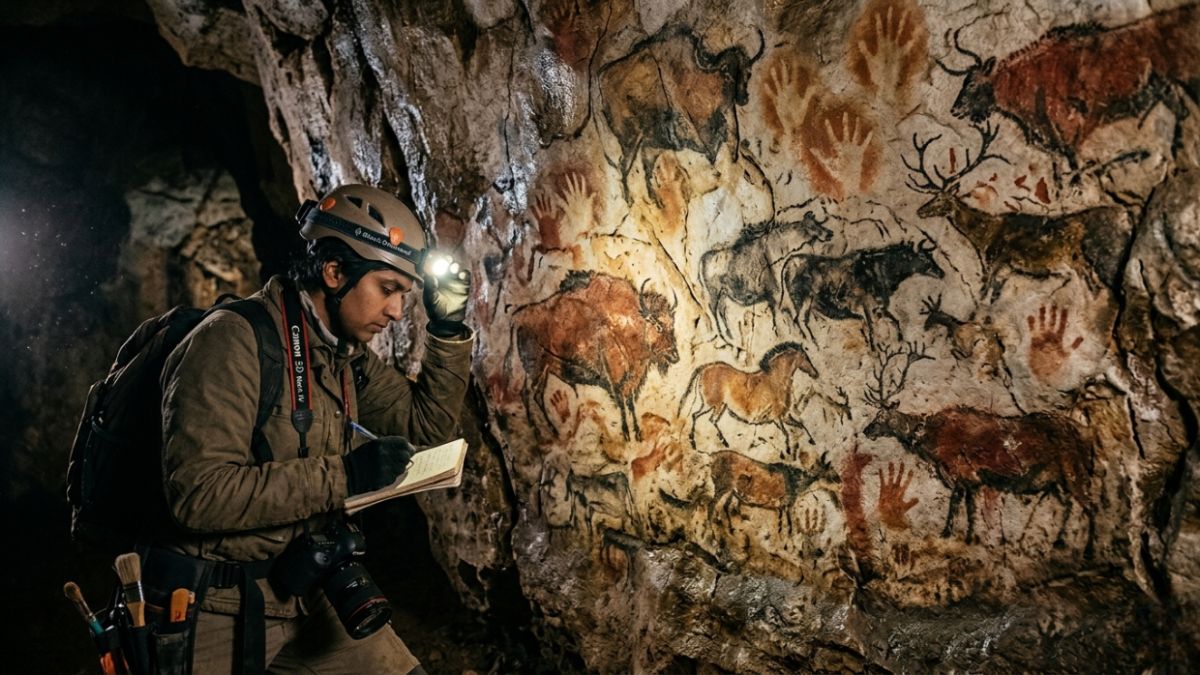

Ancient Cave Drawings of Animals: When we visit a museum and gaze upon ancient artifacts, a peculiar sensation stirs within us—a feeling as though the veil of time has grown thin, and we have connected directly with that era when humanity was just beginning to ascend the first steps of civilization. Yet, an even more profound and thrilling experience awaits when one beholds, upon the dark walls of an ancient cave, those very images crafted thousands of years ago by the hands of early humans. These cave images—also known as “cave paintings” or “rock art”—stand as the oldest and most enigmatic records of human history. The majority of these depictions feature animals: bison, horses, deer, mammoths, rhinoceroses, lions, and countless other creatures that formed an integral part of human life during that epoch. Gazing upon these images sparks a myriad of questions in the mind. Why, exactly, did these early humans create these paintings? Was it merely an artistic endeavor, or did it serve a deeper religious, social, or practical purpose? And what do these images reveal to us today about our ancestors? This journey to seek answers to these very questions transports us into that extraordinary world—a time when humans were first learning to give expression to their thoughts and emotions through the medium of images.
The World’s Oldest Art Galleries: An Introduction to Caves
Across the globe, hundreds of such caves have been discovered—sites where images created by ancient humans still adorn the walls to this day. France’s Lascaux Cave—often hailed as the “Sistine Chapel of Prehistoric Art”—is adorned with paintings dating back approximately 17,000 years. The walls here feature such vivid and intricate depictions of bison, horses, deer, and other animals that one is left in sheer astonishment, marveling that such work could have been executed by people who possessed neither formal training nor modern tools. In Spain’s Altamira Cave, the depictions of bison are rendered with such extraordinary skill that when they were first discovered in the 19th century, experts dismissed them as forgeries—simply because they could not conceive that such sophisticated artistry could have been created thousands of years ago. The paintings discovered in the Sulawesi caves of Indonesia are even older—approximately 45,000 years old—making them the world’s oldest known cave art. In India, the Bhimbetka caves in Madhya Pradesh are also of immense significance in this regard, where paintings dating back thousands of years continue to tell their stories to this day. A common thread running through all these sites is the predominance of animal imagery, which suggests the central role the animal kingdom played in the lives and consciousness of early humans.
Why Animal Paintings? The Triangle of Hunting, Fear, and Reverence
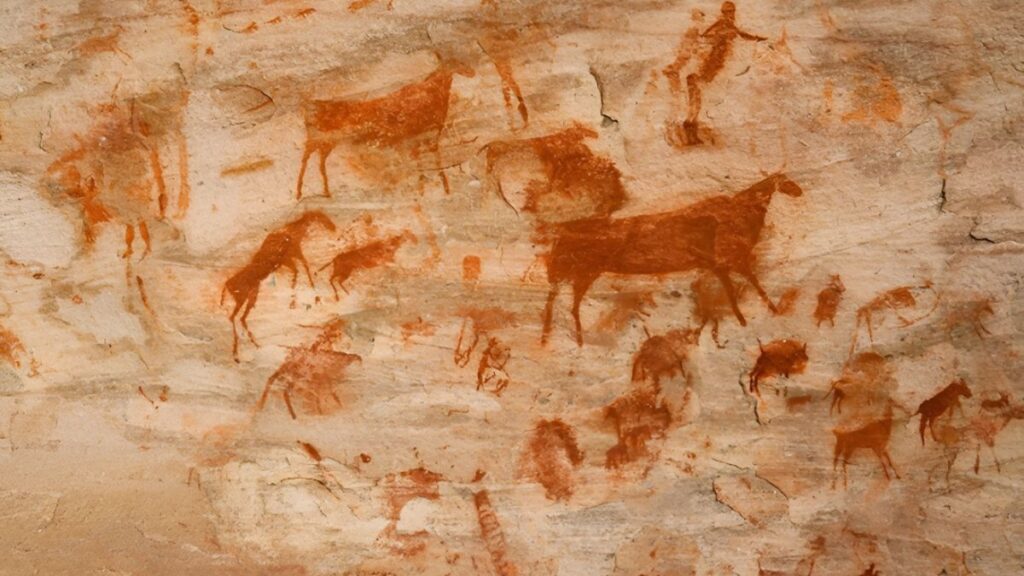
To understand the overwhelming presence of animals in cave paintings, we must delve into the mindset and lifestyle of humans from that era. For early humans, animals were not merely a source of sustenance; they were also the focal point of their very existence, their fears, their reverence, and their sense of wonder. A colossal mammoth or a mighty cave lion was, to a human hunting with stone tools, an entity as awe-inspiring and formidable as a deity. Scholars have proposed various theories to interpret these cave paintings. One prominent theory suggests that these images were linked to “Hunting Magic.” According to this hypothesis, by depicting an animal and marking it with symbolic spears or arrows, early humans believed they could ensure success in their actual hunts. Many cave paintings feature spear marks or wounds on the bodies of animals, lending credence to this theory. A second theory posits that these paintings were associated with worship or adoration. Early humans sought to internalize the power and attributes of these animals, and painting served as a medium for this endeavor. The speed of a horse, the courage of a lion, and the strength of a bison—these were qualities the early humans desired for themselves, and through painting, they attempted to forge a spiritual connection with that power.
The Art of Technique: Masterpieces Created Without Brushes
It is thrilling even to imagine the means by which early humans created these astonishing paintings. They possessed neither modern pigments, nor sophisticated brushes, nor any formal art schools where they might have received training. Yet, the works they produced could challenge even many contemporary artists. Researchers have discovered that these paintings primarily utilized four colors: red, yellow, black, and brown. These pigments were derived from natural minerals. Red and yellow were created from ochre (iron oxide); black from charcoal or manganese; and brown by blending various types of soil. These pigments were mixed with animal fat or water to create a paint-like substance. To execute the paintings, artists utilized their fingers, rudimentary brushes fashioned from animal hair, and occasionally, bones or stones. One of the most remarkable techniques employed was blowing pigment from the mouth—a method known as stenciling. This involved placing a hand against the cave wall and blowing pigment around it to create a silhouette of the hand. Such handprints are found in caves across the globe and may well represent early humans’ very first way of declaring, “I was here.”
Bhimbetka: A Treasure Trove of India’s Ancient Art
When discussing ancient cave paintings in India, the Bhimbetka Caves—located in the Raisen district of Madhya Pradesh—hold a place of exceptional significance. This site is inscribed on UNESCO’s World Heritage List and houses paintings dating back approximately 30,000 years. Bhimbetka comprises over 700 caves, of which paintings have been discovered in nearly 500. Animals feature prominently in the artwork found here as well; depictions of elephants, tigers, deer, buffaloes, rhinoceroses, and various birds adorn the walls of these caves. However, a distinctive feature of Bhimbetka is that some of its paintings depict human figures—shown hunting, dancing, or participating in rituals. This offers us a glimpse into the social life of that era. The paintings at Bhimbetka do not belong to a single period; rather, they were created over the span of several thousand years, thereby presenting a unique visual narrative of the evolution of human civilization on the Indian subcontinent. Viewing these caves evokes a sense of pride, affirming that the land of India, too, has harbored an artistic tradition as rich and ancient as those found in Europe or Africa.
The Astonishing Accuracy of Animals: A Naturalist’s Perspective
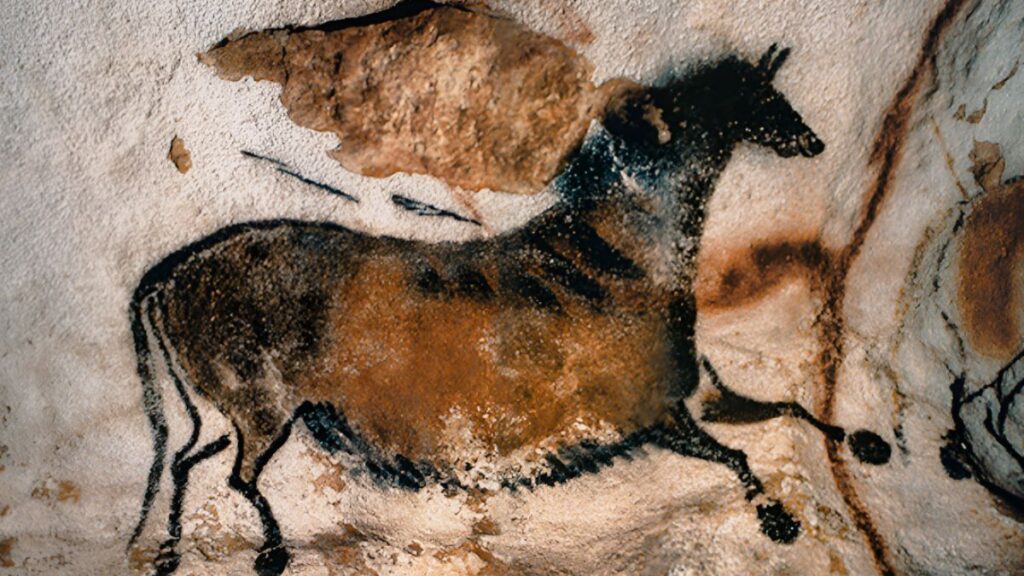
One aspect of cave paintings that astonishes both scientists and art experts is the extraordinary accuracy with which animals are depicted. The horses and bison portrayed in the caves of Lascaux and Altamira exhibit such precise anatomical structure—including musculature and gaits—that even modern-day biologists are left astounded upon viewing them. This precision serves as proof that early humans were keen and astute observers of nature. They did not view animals merely as sources of food; rather, they meticulously observed and memorized every gesture and movement of these creatures. For a hunter, such knowledge could literally mean the difference between life and death. Knowing when and how a bison attacks, the direction in which a horse flees, or the moment a deer becomes alert—all such details were absolutely essential for a successful hunt. And perhaps it was this profound observation that, when translated into art, imbued these paintings with the vitality and accuracy that continues to amaze us today. It represented a form of knowledge that was passed down from generation to generation through the medium of these paintings.
Social Messages Hidden in the Paintings: The Voice of the Community
To view cave paintings solely through the lens of art or religion would be to form an incomplete understanding of them. Hidden within these images lies a significant dimension of social communication. Early human groups inhabited distinct territories, and the means of communication available to them were extremely limited. The walls of caves served as a kind of community bulletin board. Information—such as the population density of specific animals in a region, which routes were suitable for hunting, or which animals posed a danger—was conveyed from one generation to the next and from one group to another through the medium of paintings. Some researchers also posit that cave paintings served as a means of asserting territorial claim over a region. Much like people today inscribe their names on the walls of their homes or offices, groups of early humans adorned the walls of their caves with paintings that served as a testament to their presence and identity. Viewed from this perspective, cave paintings stand as evidence of early humans’ social consciousness and sense of community.
Evidence of Spiritual Consciousness: The First Religion and Faith
Perhaps the most profound and enigmatic aspect of cave paintings is their spiritual dimension. Many experts believe that the caves most profusely adorned with paintings likely served as sites of worship or ritualistic practice. The paintings created deep within these caves—in places of absolute darkness that were difficult to access—suggest that these specific locations were regarded as something special and sacred. Some researchers hypothesize that these caves were the venues for shamanic rituals, wherein a designated individual within the group would enter a state of deep meditation or altered consciousness to commune with the spirits of animals, subsequently immortalizing that experience on the walls in the form of paintings. This hypothesis is particularly intriguing because many cave paintings feature figures that appear to be hybrid forms—half-human and half-animal—which may perhaps depict the shaman in that very state of consciousness, experiencing a sense of oneness with the spirit of an animal. This represented the nascent form of early humans’ spiritual consciousness—a consciousness that subsequently evolved and eventually blossomed into the diverse religions and faith traditions found across the world today.
On the Touchstone of Science: New Discoveries and New Questions
Modern science has revolutionized the study of cave paintings. Techniques such as radiocarbon dating and uranium-thorium dating have made it possible to determine the precise age of these paintings. This has revealed that the history of human art is far older than we previously imagined. In 2019, a painting of a wild boar—estimated to be approximately 45,500 years old—was discovered in the Sulawesi cave in Indonesia; it is now considered to be the oldest known cave art to date. This discovery challenges the long-held notion that art originated exclusively in Europe or emerged only in later historical periods. Furthermore, techniques such as 3D scanning and multispectral imaging are now revealing paintings that are invisible to the naked eye or have faded over time. DNA analysis is enabling the identification of the materials used in the pigments found within these caves, as well as their original sources. All these scientific advancements are helping us gain a more intimate understanding of the world of early humans, yet they simultaneously raise new questions—questions for which answers are still being sought.
The Challenge of Conservation: The Battle to Preserve Our Heritage
It is a regrettable reality that the very paintings that have survived thousands of years of natural challenges are today endangered by human negligence and modern lifestyles. The Lascaux cave, for instance, had to be closed to the general public in 1963 because the carbon dioxide exhaled by tourists—combined with their body heat—fostered the growth of fungi and algae within the cave, thereby damaging the paintings. Consequently, an exact replica of the cave has since been created, which visitors can now tour. Similarly, at Bhimbetka, issues involving damage to the rock inscriptions and unauthorized construction in the vicinity have posed significant challenges. Across the globe, scientists and government authorities are collaborating to ensure the preservation of cave paintings. Digital documentation represents a crucial step in this effort; it involves creating high-resolution 3D images and digital replicas of these paintings, ensuring that even if the original artworks are eventually lost or destroyed, the vital information they contain remains safeguarded. This act of preservation is not merely an attempt to save stones and pigments; it is a battle to safeguard our own human heritage.
The First Artist Who Changed the World
When we view cave paintings in their entirety, a profound and emotional truth emerges. The human being who, 45,000 years ago, depicted an animal within a dark cave by the flickering light of a fire was not so very different from us. He, too, had dreams, fears, and curiosities—and a deep desire to somehow express what he saw and felt, to share it with another. Painting was the medium through which he first forged a realm of communication that transcended language. The tradition he initiated went on to become the very foundation of humanity’s greatest achievements: painting, sculpture, literature, and music. Viewing these cave paintings is such a profound experience precisely because they remind us of where we come from. That first artist—leaning against a cave wall to sketch a bison—was, in reality, taking the very first step in humanity’s infinite journey, a journey that continues to this day.
FAQs
Q1. What are cave paintings and how old are the oldest ones?
A. Cave paintings are ancient drawings made by early humans on rock and cave walls using natural pigments. The oldest known cave art is found in Sulawesi, Indonesia, dating back approximately 45,500 years, making it older than the famous European cave paintings.
Q2. Why did early humans mostly draw animals in cave paintings?
A. Animals were central to early human survival, representing food, fear, and spiritual power. Early humans drew animals for purposes like hunting magic, where painting an animal was believed to bring success in the hunt, and also for worship, storytelling, and passing survival knowledge across generations.
Q3. What materials and tools did early humans use to create cave paintings?
A. They used natural minerals like iron oxide for red and yellow, charcoal and manganese for black, mixed with animal fat or water. Tools included fingers, primitive brushes made from animal hair, and bones. A fascinating technique called stenciling involved blowing pigment around a hand placed against the cave wall.
Q4. What is the significance of Bhimbetka cave paintings in India?
A. Bhimbetka in Madhya Pradesh is a UNESCO World Heritage Site containing over 500 painted caves with art dating back around 30,000 years. It features animals like elephants, tigers, deer, and rhinos alongside human figures, offering a rare visual record of early human life on the Indian subcontinent.
Q5. Why is the preservation of cave paintings so challenging today?
A. Cave paintings that survived thousands of years are now threatened by human activity. For example, Lascaux cave in France was closed to tourists in 1963 because visitors’ breath and body heat caused fungus and algae growth that damaged the paintings. Digital documentation and strict access controls are now used worldwide to protect these irreplaceable treasures.