
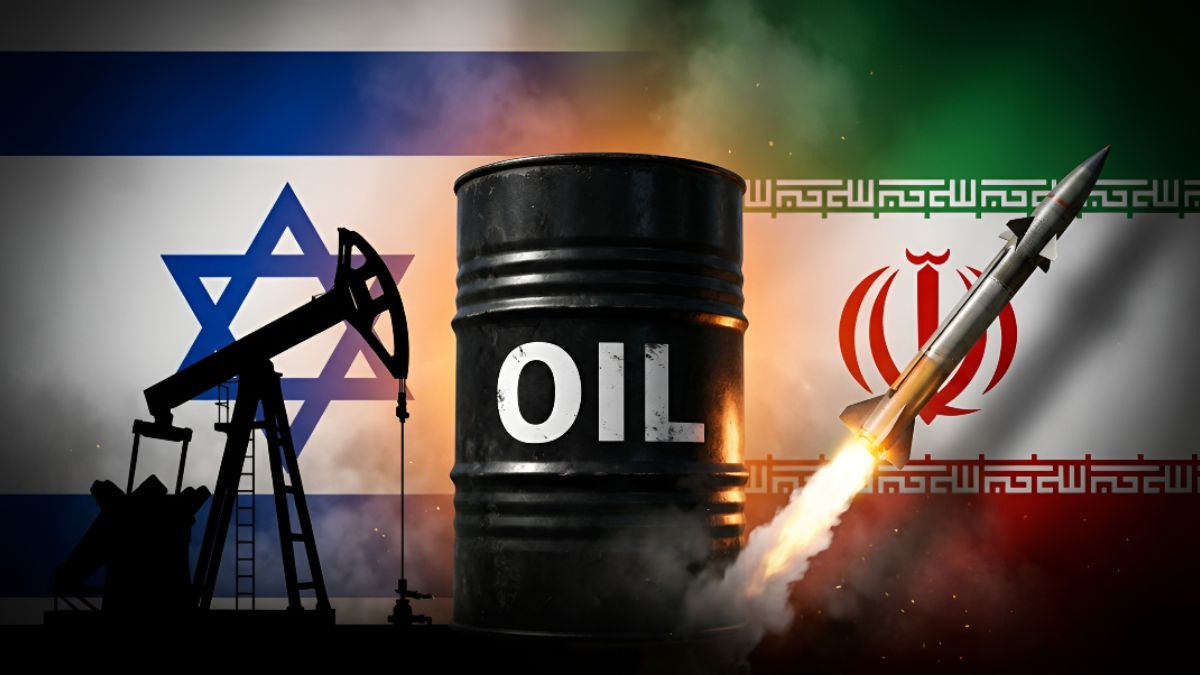

Middle Eastern politics has operated in a specific manner for decades. Iran has consistently projected its power from the shadows—maintaining pressure on its adversaries through proxy groups such as Hezbollah, Hamas, the Houthi rebels, and various Iraqi militias. This was a strategy that allowed Iran to advance its interests without directly entering the fray itself, making it difficult for Israel and the United States to prove that an attack originated directly from Tehran. But now, the rules of the game have changed. Iran has launched direct attacks against Israel using missiles and drones—striking from Iranian soil, executed by the Iranian military. This shift is not merely a military incident; it represents a historic turning point in Middle Eastern geopolitics, the repercussions of which will be felt for decades to come.
To grasp the full significance of this shift, it is essential to understand the distinction between proxy warfare and direct, state-level aggression. When a nation launches an attack through a militia, it retains the advantage of plausible deniability. However, when Iran itself fires missiles at Israel from its own territory, it constitutes a direct act of aggression by one sovereign state against another. This places the U.S. military presence in the Gulf region in immediate jeopardy, destabilizes regional security, and compels every nation to decide precisely where its allegiances lie.
“Cost-Imposition Warfare”—Cheap Drones vs. Costly Defense Systems
Embedded within Iran’s strategy lies a remarkably shrewd economic rationale, known as “cost-imposition warfare.” Understanding this strategy is absolutely critical to comprehending the dynamics of contemporary geopolitics.
The drones currently being deployed by Iran carry an estimated price tag of a mere $20,000 to $50,000 apiece. Conversely, the interceptor missiles utilized by Israel and the United States to shoot down these drones cost approximately $4 million each. Consider the staggering disparity: interceptor missiles costing upwards of 10 million rupees must be expended simply to bring down a single, inexpensive drone. And Iran is capable of launching hundreds of drones simultaneously.
This asymmetry grants Iran a unique strategic advantage. If Israel and its allies attempt to shoot down every single drone, their defensive stockpiles will be depleted rapidly. Conversely, if they choose to ignore some of the drones, those drones could inflict damage upon civilian or military targets. It is a trap in which the defender stands to lose, regardless of the outcome. The world’s most sophisticated air defense systems—Israel’s Iron Dome, David’s Sling, and Arrow systems—have begun to reveal their limitations in the face of such large-scale attacks. This places a significant question mark over the entire concept of modern air defense technology.
The Energy Crisis and the Threat to Global Supply Chains
This direct confrontation between Iran and Israel is not merely a bilateral issue; its repercussions are being felt across the entire global economy. The Middle East serves as one of the world’s most critical energy corridors, and this conflict has placed that corridor directly in the crosshairs.
The Strait of Hormuz—the narrow maritime passage through which approximately 20 percent of the world’s oil flows—is now under direct threat. Should this passage be closed or disrupted for any reason, global oil prices could experience a sudden and massive surge. The impact of this would not be limited to oil-importing nations alone; the entire global supply chain would be thrown into disarray.
Even more concerning is the fact that this conflict now poses a threat to the critical infrastructure of Gulf nations such as Kuwait, Bahrain, and Qatar. These countries are not only hubs for oil production but also integral components of the global financial and logistics architecture. Bahrain hosts the U.S. Fifth Fleet, while Qatar is home to Al Udeid Air Base—one of the largest U.S. military installations abroad. Any threat to these bases would directly drag the United States even deeper into this Middle Eastern conflict. This situation holds immense relevance for India as well, given that the country sources a significant portion of its energy requirements from this region, and millions of Indians are employed there.
The Dilemma of Jordan and Regional Nations — The End of Neutrality
There is an aspect of this conflict that receives little discussion yet holds immense geopolitical significance: the pressure exerted upon small and medium-sized regional nations. When Iran launched hundreds of drones and missiles toward Israel, their flight path traversed Jordanian airspace. Jordan—a nation that is neither an adversary of Iran nor a staunch ally of Israel—was compelled to activate its air defense systems and shoot down several of the Iranian drones.
This incident demonstrates that the conflict is now engulfing even those nations that sought to remain aloof from it. Neutrality is fast becoming a luxury that the nations of this region can no longer afford. When Iranian missiles traverse your airspace, you are forced to make a choice: do you intercept them, or do you let them pass? Either option inevitably aligns you with one side or the other.
Saudi Arabia, the UAE, and other Gulf nations find themselves under similar pressure. These countries have recently seen some improvement in their diplomatic ties with Iran and have no desire to plunge directly into this conflict. However, as the scope of Iranian drone attacks expands, these nations are being drawn ever closer to the U.S.-Israel security framework in the interest of their own defense. This is precisely the outcome Iran sought to avoid—yet, through its own aggressive policies, it has inadvertently brought it about.
Testing Air Defense Technology — The Limits of Iron Dome
Israel’s Iron Dome air defense system is considered one of the most impressive defensive systems in the world. It has successfully intercepted thousands of rockets fired from Gaza. However, Iran’s massive drone and missile attacks have exposed vulnerabilities in this system that were not previously so apparent.
The problem is that Iron Dome—and similar systems—can handle only a limited number of simultaneous incoming threats. When hundreds of drones converge from different directions at once, it places extraordinary pressure on the defensive mechanism. Interceptor missiles are finite in number, and replenishing them takes time. What happens, then, if the next attack strikes in the interim?
This is not merely Israel’s problem. The United States and NATO nations are grappling with this very same question. For decades, they have operated under the assumption that they possess the world’s most advanced air defense capabilities. However, Iran’s “drone swarm” strategy has shaken this mindset. Now, defense analysts worldwide are wrestling with the challenge of how to defend against inexpensive, mass-produced drones. Laser weaponry, electronic warfare technologies, and AI-driven defense systems—all now have become top priorities for research and development. Without possessing major nuclear or conventional military might, Iran—relying solely on inexpensive drones—has compelled the entire world to fundamentally rethink its air defense strategies.
The Gulf States’ New Calculus — Pivoting Toward the US-Israel Axis
The position of the Gulf states—Saudi Arabia, the UAE, Kuwait, Qatar, Bahrain, and Oman—is extremely delicate within the context of this entire conflict. On one hand, they share a history of tension with Iran; on the other, they have made concerted efforts in recent years to mend diplomatic ties. The Saudi-Iran rapprochement brokered by China in 2023 marked a significant step in this direction.
However, Iran’s direct attacks have inflicted deep fissures upon that fragile diplomatic framework. Gulf nations are now haunted by the fear that if Iran is capable of launching such attacks against Israel, when will their turn come? Their oil platforms, their ports, their airports—all lie within the striking range of Iranian drones and missiles.
This very fear has gradually begun to push these nations closer to the security frameworks of the United States and Israel. Under the Abraham Accords, the UAE and Bahrain are already in the process of normalizing relations with Israel. Saudi Arabia, too, was taking steps in this same direction. Iran’s attacks have only accelerated this process. It is a bitter irony: Iran, which sought to weaken Israel, has instead shattered Israel’s regional isolation and forged new allies for it.

Rewriting the Regional Balance of Power
The balance of power in the Middle East has historically been a complex and delicate arrangement. However, Iran’s direct attacks have rapidly transformed this order. Some of these changes are immediate, while others are long-term.
The immediate change is that the United States has been compelled to significantly bolster its military presence in the region. U.S. naval vessels, Patriot missile batteries, and F-35 fighter jets are all being rapidly deployed to the area. This constitutes both an economic and a strategic burden for the United States. The long-term change is that Iran has proven itself to be a force that can no longer be ignored. While it may not possess nuclear weapons, its missile and drone capabilities have established it as a player capable of destabilizing the entire region.
Furthermore, the roles of Russia and China cannot be overlooked. Russia—which is itself utilizing Iranian drones in Ukraine—is unlikely to leave Iran isolated in this conflict. China maintains deep economic ties with Iran and will oppose any U.S. move aimed at undermining it. Thus, this conflict represents not merely a regional struggle within the Middle East but also another layer of the broader global power struggle.
The Threat of a Wider and More Destructive War
The biggest and most daunting question is this: Could this conflict escalate into a full-blown regional war? Experts are not ruling out this possibility. Every time Iran launches an attack and Israel vows retaliation, the ladder of tension climbs another rung higher.
If Israel were to launch a direct strike on Iranian soil—as has happened on a few occasions—Iran, too, possesses retaliatory options. Iran could threaten to blockade the Strait of Hormuz. It could simultaneously activate its proxy groups—Hezbollah in Lebanon, the Houthis in Yemen, and various militias in Iraq. The mere thought of a war unfolding on so many fronts simultaneously is enough to send shivers down one’s spine.
And amidst all this looms the nuclear issue. Iran’s nuclear program has long been the region’s foremost concern. If Iran were to perceive that its very existence is under threat, it might accelerate its pursuit of a nuclear option. This is precisely the scenario that diplomats across the globe have been striving to avert for decades.
Lessons for India and the World
It is also crucial to view this entire unfolding situation through the lens of India. India shares deep-rooted ties with the Middle East in the spheres of energy, trade, and human resources. Any disruption in the Strait of Hormuz has a direct impact on India’s economy. Millions of Indian citizens work in the Gulf nations, and their safety and security remain a constant source of concern.
Furthermore, Iran’s strategy involving drones and missiles is compelling nations worldwide—including India—to re-evaluate whether their existing air defense systems are adequately prepared to counter such low-cost, large-scale attacks. India faces border disputes with both Pakistan and China, and this new paradigm of drone warfare holds significant relevance for those potential conflicts as well.
On a global stage, this conflict offers a profound lesson: 21st-century warfare will not be waged with expensive weaponry and heavy tanks, but rather through the deployment of inexpensive drones, cyberattacks, and economic pressure. The nation that is quickest to grasp this new reality—and to prepare itself accordingly—will be the one capable of confronting the security challenges of the 21st century.
Conclusion: A New Geopolitical Reality
Iran’s missile and drone attacks have brought the geopolitics of the Middle East to a new and uncertain crossroads. The old order of proxy warfare—in which every nation could evade direct accountability—is now crumbling. This new reality of direct, state-level confrontation compels every nation to choose a side, rethink its defense strategy, and redefine its alliances.
Shooting down a $100 billion drone with a $20,000 drone is not merely a military equation; it is a harbinger of a new global order. It signals a world where power is defined not solely by large armies and expensive weaponry but also by strategic ingenuity and the capacity for asymmetric warfare. The Middle East has emerged as the first laboratory for this new reality—and its outcomes will shape the security, economy, and diplomacy of the entire world.
FAQs
Q. How has Iran’s approach to conflict with Israel changed in recent years?
A. Iran has shifted from relying exclusively on proxy groups like Hezbollah, Hamas, and Houthi rebels to launching direct, state-level missile and drone attacks from Iranian territory. This is a significant strategic shift because it eliminates Iran’s ability to deny involvement and transforms the conflict into a direct confrontation between two sovereign states, fundamentally altering the security calculations of every country in the region.
Q. What is “cost-imposition warfare” and why is it so effective for Iran?
A. Cost-imposition warfare is a strategy where Iran uses low-cost drones, estimated at $20,000–$50,000 each, to force Israel and the US to respond with expensive interceptor missiles costing around $4 million each. By sending hundreds of drones simultaneously, Iran rapidly depletes its enemies’ defense inventories at a fraction of the cost, creating a massive economic and strategic disadvantage for even the most sophisticated air defense systems in the world.
Q. Which countries beyond Israel are threatened by this escalating conflict?
A. The conflict has expanded well beyond Israel’s borders. Gulf states including Kuwait, Bahrain, and Qatar face threats to their critical energy infrastructure. Jordan has already been forced to activate its air defenses. The Strait of Hormuz, through which roughly 20 percent of the world’s oil passes, is under direct threat, meaning the economic consequences extend to energy-importing nations across Asia, Europe, and beyond — including India.
Q. How are Gulf states responding to Iran’s direct attack strategy?
A. Despite recent diplomatic efforts to normalize relations with Iran, Gulf states are growing increasingly alarmed by Iran’s direct attack capabilities. The sustained drone and missile campaign is gradually pushing countries like Saudi Arabia and the UAE closer to the US-Israel security framework, as they recognize that their own oil infrastructure, ports, and military bases fall well within the range of Iranian weapons systems.
Q. Could this conflict escalate into a full-scale regional war?
A. The risk of broader escalation is very real and cannot be dismissed. Every exchange of direct attacks moves the conflict further up the escalation ladder. If Iran were to close the Strait of Hormuz or simultaneously activate all its proxy forces across Lebanon, Yemen, and Iraq, the resulting multi-front war would be catastrophic for the entire region. The additional concern of Iran accelerating its nuclear program under existential pressure makes this one of the most dangerous and closely watched geopolitical situations in the world today.