
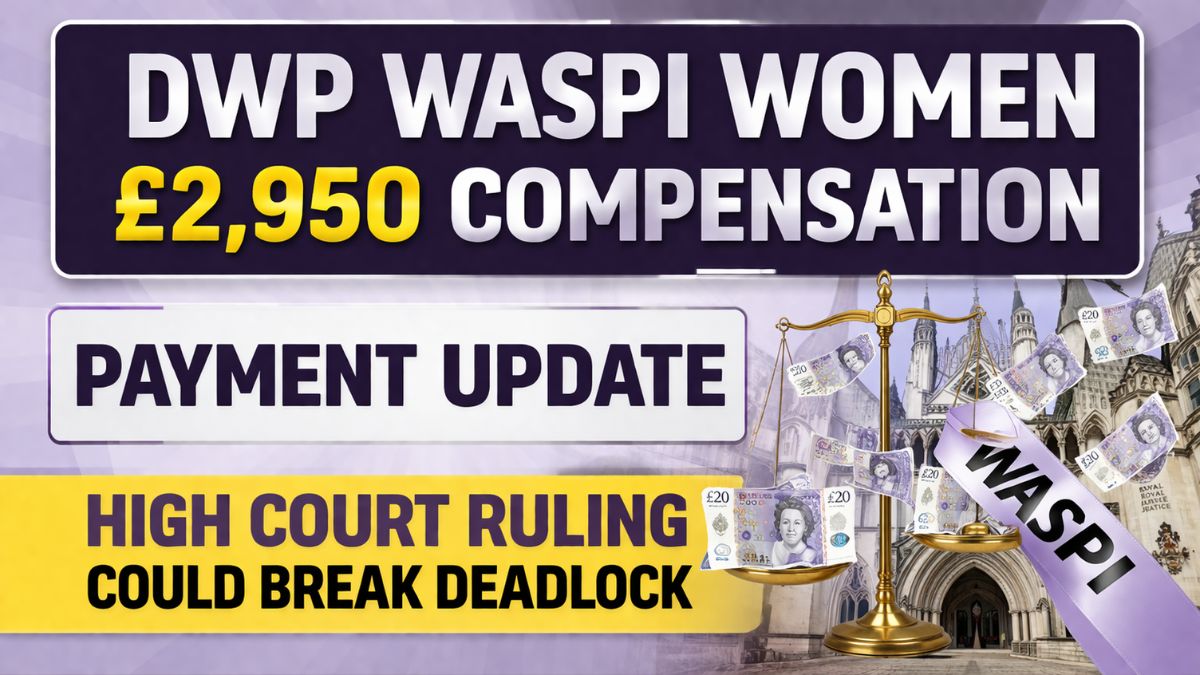

For years, thousands of women across the United Kingdom have been fighting for justice over sudden changes to their state pension age. Known widely as DWP WASPI women—short for Women Against State Pension Inequality—this group has continued to campaign for fair compensation after claiming they were not properly informed about pension reforms. Now, a fresh development involving a potential £2,950 compensation payment and a possible High Court ruling has brought renewed hope. The situation appears to be approaching a decisive moment that could finally resolve the long-standing dispute.
Understanding the WASPI Campaign and Its Origins
The WASPI movement began in response to changes introduced by the UK government to equalize the state pension age for men and women. While the principle of equality was widely accepted, the issue arose from how these changes were communicated. Many women born in the 1950s argued that they were not given sufficient notice to adjust their financial plans accordingly. As a result, thousands found themselves facing unexpected delays in receiving their pensions, causing financial hardship and emotional stress.
Over time, the campaign grew into a powerful voice advocating for fairness and accountability. It highlighted not just financial losses, but also the broader impact on retirement plans, healthcare, and overall quality of life for affected women.
The £2,950 Compensation Proposal Explained
One of the most talked-about developments in recent months is the proposed compensation amount of £2,950 for affected women. This figure is seen as a potential middle-ground solution—acknowledging the hardship caused while remaining financially manageable for the government.
The proposal stems from recommendations linked to investigations into how the Department for Work and Pensions handled communication about pension age changes. While some campaigners argue that the amount is insufficient compared to their losses, others view it as a significant step forward after years of uncertainty.
The key question now is whether this compensation will be officially approved and implemented, or whether further legal intervention will be required.
Role of the Department for Work and Pensions (DWP)
The Department for Work and Pensions has been at the center of this issue from the beginning. Critics argue that the department failed in its duty to adequately inform women about changes that would directly affect their retirement.
In response, the DWP has maintained that it acted within the law and followed established procedures. However, findings from independent investigations have suggested that communication efforts may not have been sufficient, leading to calls for compensation.
The department now faces increasing pressure to respond decisively, especially as legal proceedings and public scrutiny intensify.
High Court Ruling: A Potential Game-Changer
The possibility of a High Court ruling has introduced a new layer of urgency to the situation. Legal experts believe that a court decision could break the current deadlock between campaigners and the government.
If the court rules in favor of WASPI women, it could compel the government to provide compensation or reconsider its position. Such a ruling would not only impact the women directly involved but could also set a precedent for how similar cases are handled in the future.
On the other hand, if the ruling supports the government’s stance, it may limit further legal options for campaigners, making it a critical moment in this ongoing battle.
Why the Deadlock Has Persisted for So Long
The dispute has remained unresolved for several reasons. Firstly, the financial implications of large-scale compensation are significant, making the government cautious about committing to payouts. Secondly, there are legal complexities regarding responsibility and whether the communication failures constitute maladministration.
Additionally, differing opinions among stakeholders have slowed progress. While campaigners demand full and fair compensation, policymakers must balance these demands with budget constraints and broader policy considerations.
This combination of financial, legal, and political factors has contributed to the prolonged nature of the dispute.
Public Support and Political Pressure
Public sympathy for WASPI women has grown steadily over the years. Many people view their situation as an example of systemic failure, where individuals were left to bear the consequences of policy changes they did not fully understand.
Political leaders have also faced increasing pressure to address the issue. Debates in Parliament, media coverage, and grassroots campaigns have kept the topic in the public eye. As elections and policy reviews approach, the issue is likely to remain a key point of discussion.
The growing support has played a crucial role in pushing the conversation forward, even as official decisions remain pending.
Financial and Emotional Impact on Affected Women
Beyond the legal and political aspects, the human impact of the issue cannot be overlooked. Many WASPI women have reported significant financial difficulties due to delayed pensions. Some were forced to continue working longer than expected, while others struggled to meet basic living expenses.
The emotional toll has been equally significant. Feelings of frustration, betrayal, and uncertainty have been common among those affected. For many, the campaign is not just about money but about recognition and fairness.
These personal stories have added urgency to the demand for a resolution, emphasizing that the issue goes far beyond policy debates.
What Happens Next? Possible Outcomes
As the situation develops, several possible outcomes are emerging. If the High Court rules in favor of compensation, the government may be required to implement payments, potentially including the proposed £2,950 amount or a revised figure.
Alternatively, the government could choose to introduce a compensation scheme voluntarily, aiming to resolve the issue without further legal battles. This approach could help rebuild trust and demonstrate accountability.
However, there is also the possibility that no immediate resolution will be reached, leading to continued campaigning and legal action. The coming months will be crucial in determining which path is taken.
Broader Implications for Pension Policy
The WASPI case has broader implications for pension policy and government accountability. It highlights the importance of clear communication when implementing major policy changes, especially those affecting people’s financial security.
Future reforms are likely to be scrutinized more closely, with greater emphasis on transparency and fairness. The outcome of this case could influence how governments approach similar issues in the years to come.
In this sense, the impact of the WASPI campaign extends beyond the individuals involved, shaping the future of public policy.
Conclusion: A Defining Moment for Justice and Accountability
The ongoing struggle of WASPI women represents one of the most significant pension disputes in recent history. With the possibility of a £2,950 compensation payment and a High Court ruling on the horizon, the situation appears to be reaching a निर्णतिव मोड़.
For the women involved, the stakes are deeply personal. For the government, the case is a test of accountability and fairness. And for the public, it serves as a reminder of the importance of transparency in policymaking.
As developments unfold, one thing is clear: the outcome will not only determine the future for WASPI women but also set a lasting precedent for how similar issues are addressed in the future.
FAQs
1. What is the £2,950 WASPI compensation?
It refers to a potential payment for women affected by state pension age changes in the UK.
2. Who are WASPI women?
WASPI stands for Women Against State Pension Inequality, representing women impacted by pension age reforms.
3. Has the £2,950 payment been confirmed?
No, it is still under review and depends on government decisions and court outcomes.